
Mortgage Rates Climb to 7.28% as the 10-Year Treasury Hits a 24-Year High

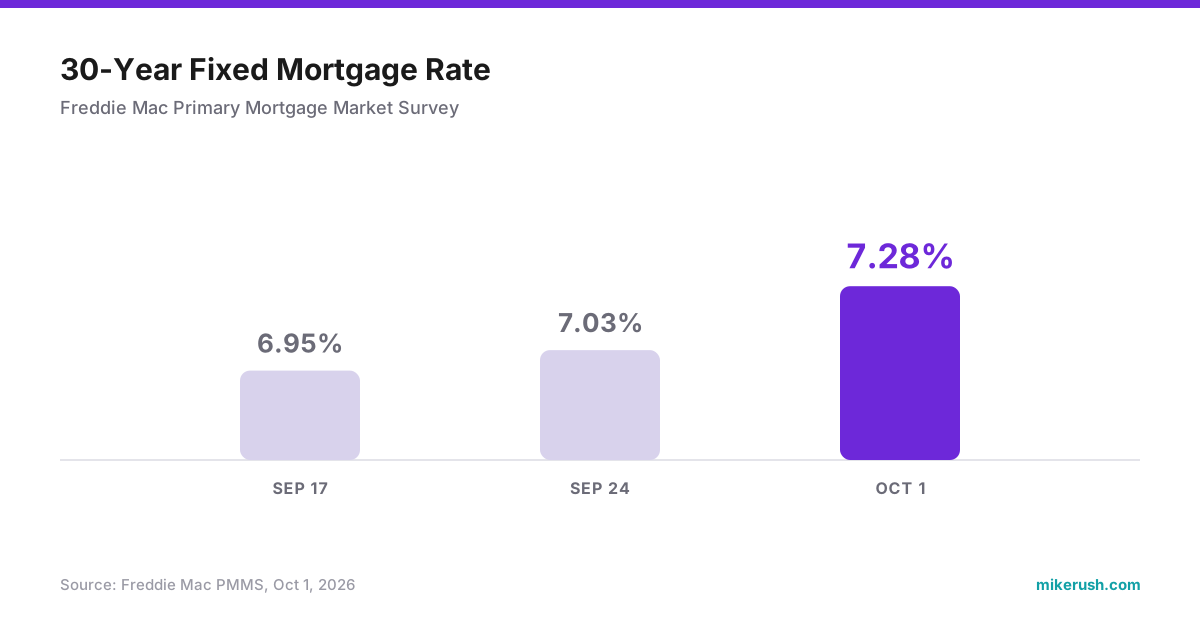
Mortgage rates just made their sharpest move since they first crossed 7% a week ago. Freddie Mac’s weekly survey, released October 1, 2026, put the 30-year fixed rate at 7.28%, up from 7.03% the week before. The 15-year fixed climbed to 6.60% from 6.42%. The push came from the bond market, not the Fed: the 10-year Treasury yield touched 5.31% on September 30 — its highest level in 24 years.
Why bond yields are driving this
Mortgage rates track the 10-year Treasury more closely than they track the Fed’s own rate, and this week’s Treasury move came from signals pulling in different directions. The Fed’s preferred inflation gauge, core PCE, actually came in a little cooler than expected — up 3% annually versus a 3.7% forecast — which normally would ease pressure on long-term rates. But an unexpectedly strong ADP private-payrolls report, plus ongoing concern about federal borrowing and fiscal debt, pushed yields higher anyway. “At least one more rate hike from the Fed remains nearly inevitable, even after Core PCE came in cooler than expected, since inflation is still well above the Fed’s 2% target,” said Tom Graff, Chief Investment Officer at Facet. Markets are now pricing the next Fed move toward December rather than late October, with October rate-hike odds down to 37% after the inflation data.
What it costs you
On a $500,000 mortgage, the move from 7.03% to 7.28% adds about $84 a month to the payment — not dramatic on its own. The bigger shift is versus a year ago: that same loan at September 2025’s 6.34% rate cost about $313 less per month than it does today. That’s the number worth planning around if you’re budgeting for a purchase.
Some context before you panic
Today’s 7.28% feels high against the last few years, but it isn’t high against history. The 30-year fixed has averaged 7.70% since Freddie Mac started tracking it in April 1971. The closest comparable stretch is the 1990s, which mostly ran in the 7–8% range for a full decade — not the 1981 spike above 16%. The real outlier was 2020–2021, when rates near 3% pulled a huge number of buyers and refinancers off the sidelines at once. Today’s rate is closer to the long-run normal than it is a historic extreme.
What it means in Denver right now
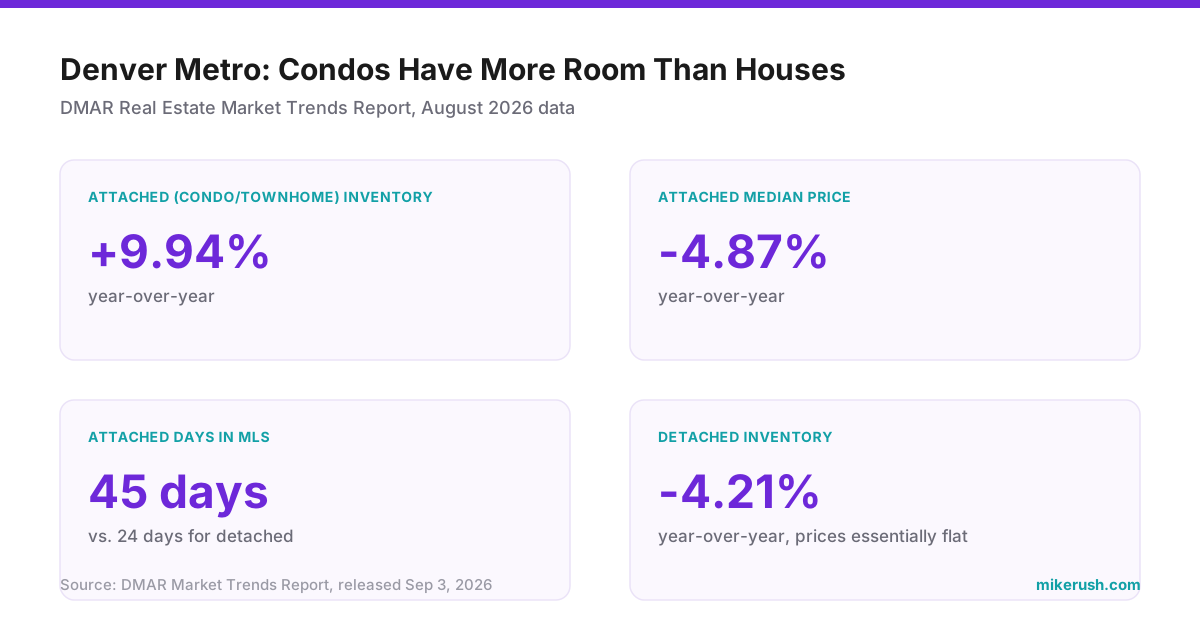
DMAR’s August 2026 market trends report, released September 3, shows the rate environment landing very differently depending on what you’re buying. Detached single-family inventory is actually down 4.2% year-over-year, and detached prices are holding essentially flat — that segment hasn’t loosened up much. Attached homes — condos and townhomes — are a different story: inventory is up nearly 10% year-over-year, median prices in that segment are down almost 5% year-over-year, and the typical attached listing is now taking 45 days to sell versus 24 days for a detached home. If higher rates have priced you out of a single-family home, the condo and townhome market right now has real room to negotiate on price and terms that it didn’t have a year ago.
What this means for you
If you’re a buyer, this is a good week to get your pre-approval refreshed rather than relying on a number from a month or two ago — a lender can also walk you through whether a temporary or permanent rate buydown makes sense at today’s pricing. If you’re shopping in the attached or condo space specifically, you’re negotiating from a stronger position than you were in early 2026. If you’re a seller, especially of a condo or townhome, pricing to today’s longer days-on-market reality matters more than it did when inventory was tighter.
Thinking about buying or selling? Let’s talk through what it actually means for your plan.
This is general market information, not financial, investment, or lending advice, and rates change daily — talk to your lender for a quote specific to you.
Sources
Freddie Mac, Primary Mortgage Market Survey, October 1, 2026 (freddiemac.com)
Freddie Mac PMMS release via GlobeNewswire, October 1, 2026
Invezz, “US 10-Year Treasury Yield Hits 24-Year High Above 5.30%,” September 30, 2026
DMAR (Denver Metro Association of Realtors), Real Estate Market Trends Report, August 2026 data, released September 3, 2026
The Mortgage Reports, historical 30-year fixed rate average since 1971 (Freddie Mac data), checked September 26, 2026