
Denver’s September Closings Were the Slowest Since 2008 — Here’s the Opening It Creates for Buyers
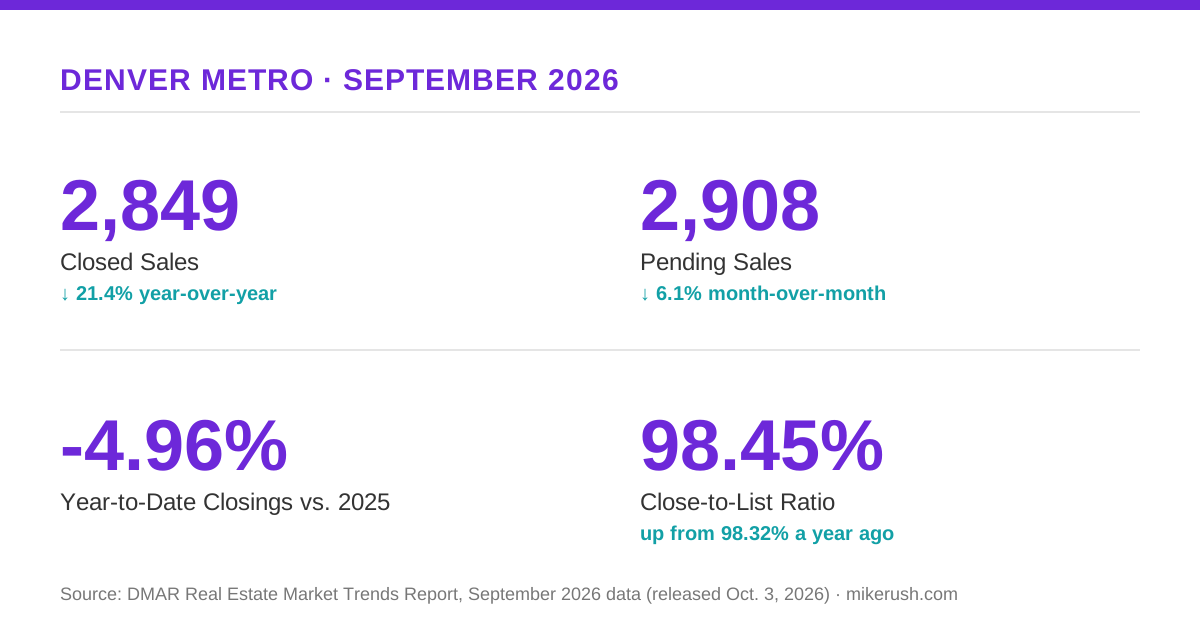
Denver Metro Association of Realtors’ (DMAR) September 2026 market trends report, released October 3, shows just 2,849 homes closed across the metro last month — the fewest September closings since 2008, down 21.39% from a year ago. That’s the headline number. The one worth paying more attention to, from the same report: buyers who are still shopping right now have more room to negotiate than at almost any other point this year.
The slowdown, by the numbers
September’s 2,849 closings were down 11.71% from August and down 21.39% from a year earlier. Pending sales — the contracts signed but not yet closed — came in at 2,908, down 6.07% month-over-month. Year-to-date, closings across the metro are running 4.96% behind 2025’s pace. None of that is a single bad month; it’s a slower year.
A slower pace isn’t a falling market
Fewer sales doesn’t mean prices are giving way. The detached (single-family) median closed price is $650,000 year-to-date — the third year running it’s landed almost exactly there. The attached segment — condos and townhomes — is softer, down 6.28% year-over-year to a $365,500 median. And homes that did sell in September actually moved a little faster than a year ago: a median 32 days in MLS, down from 35. Sellers who found a buyer also got closer to their asking price than last year, at a 98.45% close-to-list ratio versus 98.32%. This isn’t a market in free fall — it’s one with meaningfully fewer transactions happening.
Where the room to negotiate actually is
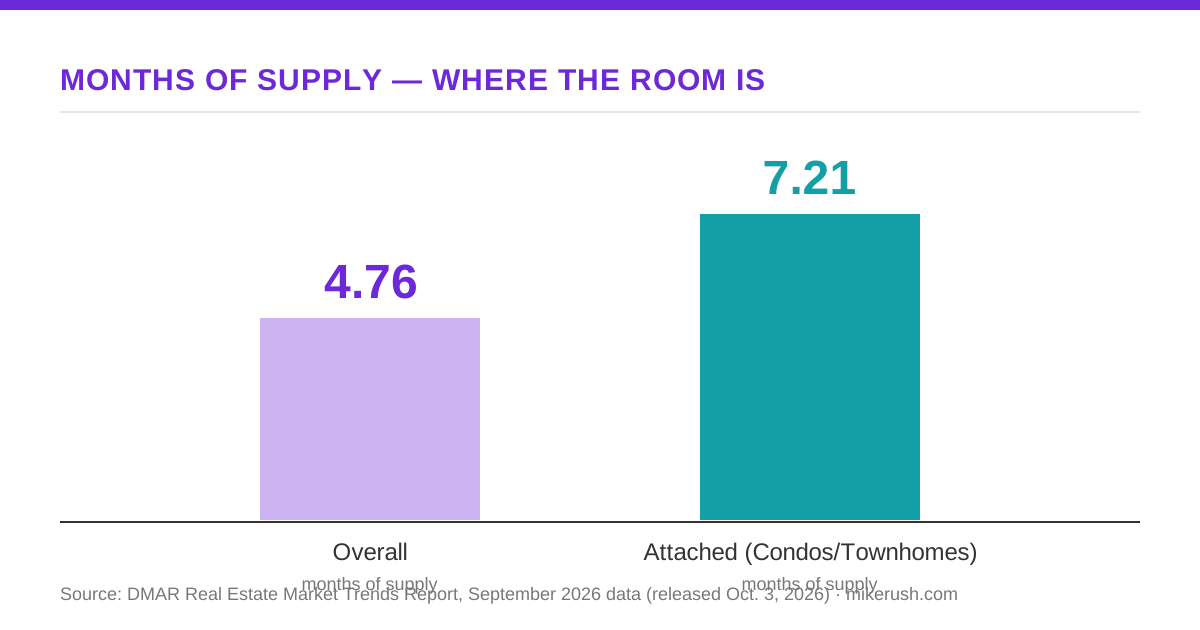
DMAR Market Trends Committee Chair Amanda Snitker put it directly: buyers who stay in the market right now face less competition than at any other point this year, with rate buydowns, seller concessions and adjustable-rate loans all realistically on the table in a way they weren’t a year or two ago. That leverage isn’t spread evenly. Overall months of supply sit at 4.76 — a fairly balanced market — but the attached segment alone is at 7.21 months, squarely buyer’s-market territory. If a single-family home has been out of reach on price, the condo and townhome market is where the actual give is right now.
The $1M+ market didn’t get the memo
Not every segment slowed down. Year-to-date, closed sales above $1 million are up 1.99% to 4,449 homes, with sales volume up 3.17% to $7.30 billion; within that, attached $1M+ closings are up 6.35%. DMAR committee member Michelle Schwinghammer noted that while lower price segments are struggling, this segment “isn’t waiting for conditions to improve.” Worth remembering: “the Denver market” isn’t one market. Conditions vary a lot by price point and property type, and a headline slowdown number can hide a segment that’s still moving fine.
What rates are doing, in perspective
Freddie Mac’s October 8 survey put the 30-year fixed at 7.40%, up slightly from 7.28% the week before — on a $500,000 mortgage, that’s about $41 more a month, not a dramatic shift on its own. Zoomed out, today’s rate is closer to normal than it looks: the 30-year fixed has averaged 7.70% since Freddie Mac started tracking it in April 1971, and the 1990s mostly ran in the 7–8% range for a full decade. The real outlier was 2020–2021’s run near 3%, not where rates sit today.
What this means for you
If you’re a buyer, September’s numbers are a real opening, not just a seasonal lull: fewer people bidding against you, genuine concessions and buydowns on the table, and the condo/townhome segment carrying nearly seven months of supply. I’d start by getting your pre-approval refreshed so you know exactly what that leverage is worth in your budget. If you’re selling — especially a condo or townhome — pricing to today’s conditions matters more than it did a year ago; the $1M+ segment is proof that pricing and positioning still win regardless of the broader slowdown.
Thinking about buying or selling in the Denver area? Let’s talk through what this actually means for your plan.
This is general market information, not financial, investment, or lending advice, and rates change daily — talk to your lender for a quote specific to you.
Sources
- DMAR (Denver Metro Association of Realtors), Real Estate Market Trends Report, September 2026 data, released October 3, 2026 (dmarealtors.com)
- Freddie Mac, Primary Mortgage Market Survey, October 8, 2026 (freddiemac.com/pmms)
- The Mortgage Reports, historical 30-year fixed mortgage rate average since 1971 (Freddie Mac data), checked October 8, 2026